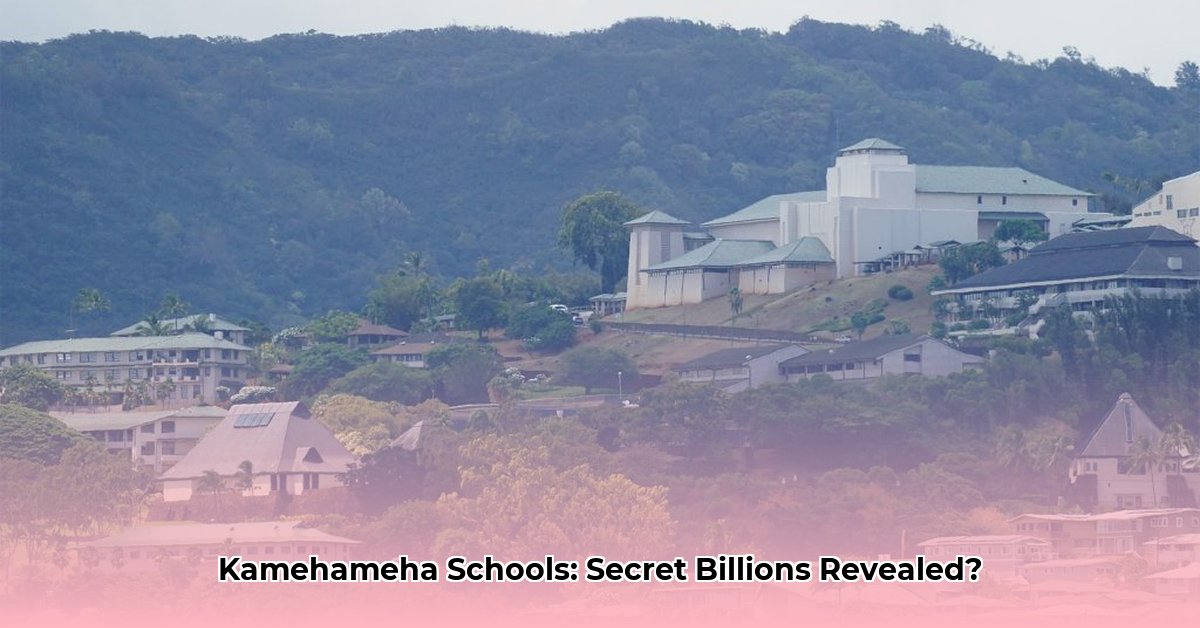
Kamehameha Schools' substantial endowment plays a vital role in securing the future of Hawaiian education. This article analyzes its investment strategy, risk management, and areas for potential improvement, emphasizing the need for increased transparency. Understanding this endowment's performance is crucial not only for the school's future but also for understanding best practices in large-scale educational financial management.
Kamehameha Schools' Investment Strategy: A Globally Diversified Approach
Kamehameha Schools targets an inflation-adjusted annual return of approximately 5%, a goal achieved through a globally diversified investment portfolio. This strategy employs a blend of active and passive management, aiming to balance high-growth potential with risk mitigation. How effectively does this strategy balance growth and risk? The answer hinges on a deeper understanding of its asset allocation and performance data. The school's approach resembles a diversified investment portfolio, spreading risk across numerous asset classes to safeguard against significant losses in any single sector.
Active vs. Passive Management: A Balanced Approach
A portion of the endowment is actively managed, utilizing investment professionals to identify potentially high-yield opportunities that might be overlooked in passive index-tracking strategies. This active approach seeks to generate "alpha," or returns exceeding market benchmarks. However, the exact proportion of actively managed assets remains undisclosed. What percentage of the portfolio is dedicated to active management, and how does this allocation align with the school’s overall risk tolerance? This active management is complemented by passively managed investments, mitigating risk associated with active market timing.
Risk Management and Illiquidity
Kamehameha Schools' investment strategy incorporates risk management through diversification and risk budgeting. While the school limits illiquid assets (those difficult to quickly convert to cash) to 40% of the portfolio, the specific nature of these assets and their current performance are not publicly available. What types of illiquid assets comprise this 40%, and how does the school assess the liquidity risk associated with them? Understanding the composition of this portion is critical for a comprehensive risk assessment. A significant portion of the portfolio is invested in Hawaii real estate, creating a concentration risk that demands ongoing monitoring and mitigation strategies.
Transparency and the Need for Enhanced Disclosure
A major limitation in fully evaluating Kamehameha Schools' financial health is the lack of publicly available, detailed performance data. While the school's commitment to long-term growth and diversification is evident, the absence of specifics on individual asset performance hinders comprehensive analysis. What specific performance metrics are tracked, and how frequently are they reported internally? This opacity makes a complete assessment of their risk mitigation and return generation capabilities challenging. This lack of transparency prevents a comprehensive assessment of the effectiveness of their strategy.
Stakeholder Needs and Future Goals
Various stakeholders have specific informational needs. Kamehameha Schools' Board requires transparent performance reports to oversee the endowment's management effectively. Investment managers need clear communication on performance expectations and risk tolerances. Students, as the ultimate beneficiaries, need assurances of long-term financial stability supporting their education. The public deserves transparency in key performance indicators to ensure responsible stewardship of the endowment.
| Stakeholder Group | Short-Term Needs (0-1 Year) | Long-Term Needs (3-5 Years) |
|---|---|---|
| Kamehameha Schools Board | Detailed performance reports; risk assessment updates | Exploration of new investment strategies with thorough risk analysis |
| Investment Managers | Performance benchmarks; clear communication channels | Continuous refinement of investment strategies; due diligence improvements |
| Students (Beneficiaries) | Assurance of consistent funding for education | Transparency regarding endowment performance and its impact on their education |
| Public | Public disclosure of key performance indicators | Improved ESG (Environmental, Social, and Governance) factor integration |
Recommendations for Improvement and Future Outlook
Greater transparency is paramount. Detailed reporting of investment performance across various asset classes, including the breakdown of illiquid assets and the selection process for investment managers, would improve the assessment of risk and performance. This enhanced transparency would build trust and confidence among all stakeholders. The future success of Kamehameha Schools rests on a robust financial foundation built upon open communication and responsible investment practices. The school's commitment to long-term growth is commendable, and by embracing increased transparency, it can further demonstrate its accountability and ensure the long-term educational benefits for future generations.